Personalities
 |
 |
 |
 |
 |
 |
 |
St. Bernard & the Antipopes - II
For Seven Years St. Bernard
Fights the Antipope
Most Catholics are unaware of the period in the 12th century when there were two Popes. In February in 1130 a papal election was held after the death of Pope Honorius II. One group of Cardinals led by the French Card. Amery de la Chatter elected Gregorio Papareschi as Innocent II. The rest of the Cardinals refused to recognize him and elected Card. Pietro Pierleoni as Anacletus II. Each excommunicated the other and the fight began.
 Anacletus II had the support of more of the Cardinals and had many adherents in Italy, but Innocent had been elected first and received the first homage of the people as new Pope. Further, as St. Bernard would write in a letter to the German Emperor Lothar, “Anacletus has not even a good reputation with his friends, while Innocent is illustrious beyond all doubt.” (1)
Innocent was not able long to defend himself, as Pierleoni soon brought the whole of Rome to his own side as a result of threats and bribes, made with gold from the coffers of bankers who supported the cause of the Jewish anti-Pope. (2)
The Council at Étampes
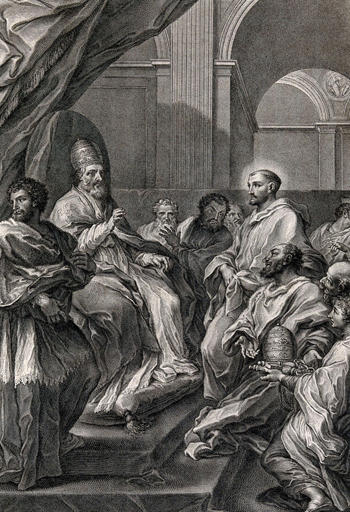
In the ensuing turmoil, Innocent fled to France. It fell to King Louis VI to convoke a great council at Étampes in 1130 with representatives from France, Germany and Italy present so a decision could be made. St. Bernard was called upon to be present to serve the welfare of the Church and resolve this great schism.
The Vita Prima Bernardi, written by contemporaries of St. Bernard, reports:
“So it was decided that a Council should be held at Étampes and Bernard, the Abbot of Clairvaux, was, at the King’s instance, requested to be present.
 “Though unwilling and hesitant, Bernard accepted the commission. He believed it his duty to comply with the request of the respected men. Enlightened by the Holy Spirit, he carefully stated
in the procedure of the election the merits of the two elected men. As the mouthpiece of that assembly, Bernard decided for Innocent. The whole Council acclaimed Innocent as rightful Pope forthwith. All subscribed to the election of Innocent and swore their obedience to him.” (3)
“Though unwilling and hesitant, Bernard accepted the commission. He believed it his duty to comply with the request of the respected men. Enlightened by the Holy Spirit, he carefully stated
in the procedure of the election the merits of the two elected men. As the mouthpiece of that assembly, Bernard decided for Innocent. The whole Council acclaimed Innocent as rightful Pope forthwith. All subscribed to the election of Innocent and swore their obedience to him.” (3)
Thus Pope Innocent came to France and was received by King Louis at Orleans. From there Innocent, accompanied by St. Bernard, went to Chartres to meet the King Henry of England with his suite. Although he had been at first persuade by an English Bishop to not receive Innocent as the rightful Pope, Bernard came to him and said:
“’Why do you hesitate? Do you think you will commit a sin by submitting yourself to Innocent? Better that you think how you will answer God for your other sins. Let me answer to God for this, if it be any sin.’ By such words the mind of the mighty King was changed and he was persuaded to receive Innocent as the rightful Pope.”
St. Bernard in Aquitaine
But there was still not accord in France because Duke William of Aquitaine was intervening forcefully for the anti-Pope. Under Anacletus he had then expelled the true Bishops of Aquitaine and replaced them with others favorable to him.
To put a speedy end to the trouble Bernard was called again from Clairvaux to visit Duke William and win him for Innocent. A meeting was arranged, where Bernard showed him that Aquitaine alone had persisted in remaining outside the unity of the Church and Ark of Salvation. The Vita tells us:
 “Therefore, St. Bernard reminded the Duke that God never lets schism go unpunished. When he heard this, the Count said he would give his obedience to Innocent, but that he would not allow the Bishops whom he had expelled to return to their sees, since they had morally offended him.
“Leaving the contending parties to it, Bernard, trusting in stronger weapons, left to say Mass. He went to the altar to offer the Holy Sacrifice. The Duke remained at the entrance.
"The Consecration was over when the Saint, who no longer looked like a mortal human being, put the Body of Our Lord on the paten and walked to the entrance of the church. His face shone and his eyes flashed lightning. No longer imploring but threatening, he stood there and addressed the Duke in a great voice:
"‘We have asked you and you have ignored us. In another assembly the servants of God have implored you but you rejected them. Now the Son of the Virgin, Who is the Head and Lord of the Church which you persecute, comes to you. Your Judge stands before you in Whose name all knees bend in Heaven, on earth and under the earth. Your Judge stands before you in Whose hands your soul too will fall. Will you despise Him and reject Him like you refused His servants?’
“When the Duke saw the Abbot coming he became paralyzed with fright. Trembling he fell down and groveled on the ground as if he were out of his senses.
“The man of God touched him with his foot, ordered him to rise and make peace with the Bishop of Poitiers whom he had expelled and lead him back to his Episcopal See.” (4)
The Duke, overwhelmed, submitted himself to Pope Innocent. Thereafter all France took the side of the legitimate Pope.
In Germany
Pope Innocent had sent envoys to Germany who were received well by Emperor Lothar III. But when the Pope went to meet him in Liege in 1131, the joyful mood soon was spoiled. The Emperor believed he could demand the investiture of the Bishops – a privilege his predecessor Emperor Henry had renounced after untiring efforts of the Roman Church.
 “No one knew what to do except the holy Abbot. He powerfully opposed the Emperor and rejected with great frankness his unjustified claim. It was marvelous indeed to see how he managed to talk down evil words with the power of his authority.” (5)
Bernard in Italy
Now Bernard remained constantly at the side of the Pope. While much had been gained, the stronghold of the anti-Pope in Italy was not yet overcome. Accompanied by Lothar and his army, Innocent and Bernard entered Rome, but Anacletus refused to meet with him. Thus in 1135 Innocent convened a Council in Pisa of all the Bishops of the West and other prominent men.
“The holy Abbot participated in all the discussions of the Council. He was revered by all and throngs of people were constantly coming to see him, so great was the reputation of his holiness. It would take too long to go through all the Acts of the Council, but the principal result of it was the excommunication of Pierleoni and the expulsion from the Church of all who favored him.” (6)
End of the Schism
Now King Roger of Sicily was the only remaining ruler who refused to give his obedience to Innocent because of his personal interests in maintaining Anacletus as pope. Therefore, Bernard was invited to Italy in the Spring of 1136 to debate against a brilliant lawyer Peter of Pisa. King Roger was certain that his champion could vanquish the Abbot of Clairvaux in the arena of a public debate.
So both parties came at his invitation to Salerno. But Peter of Pisa, after delivering a superb argument, found himself completely vanquished by the words of Bernard, which were spoken sternly and directly to him. By the grace of God Bernard thus persuaded him to come back and make his peace with Innocent.
 Even this, however, did not move Roger of Sicily. It was the moment for God to act, and shortly after this debate, Anacletus was taken sick and died, as reported in the Vita:
“The time had come when the malice of Anacletus was to reach its end. The destroying angel came to the house of Pierleoni and found his doorpost unmarked with the sign of salvation. And he struck him down, sparing his life for only three days so that he would have time to repent of all his evil deeds.
"But the anti-Pope abused God’s patience and died impenitent and despairing. He was buried with meaningless pomp and buried in an unknown place.
“His followers elected another anti-pope to succeed him, who took the name Victor. They did not intend to prolong the schism but rather waited for a more favorable occasion for reconciliation with Innocent, which God soon brought about through His servant Bernard.
“During the night, the false Pope came to Bernard. The Saint took from him the usurped insignia and led him to the feet of Innocent. Great jubilation prevailed in the whole city and the Roman people submitted themselves to Innocent as their lord and shepherd.
“The Abbot of Clairvaux was highly praised and celebrated by all of Rome as peace maker and father and revered as pater patriae. And although they would have loved to keep him with them, they could not hold him longer than a fortnight. He had labored for the unity of the Church for over seven years.” (7)
Continued

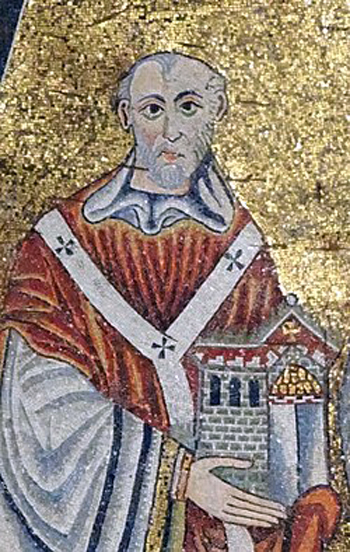
Innocent II, from a mosaic in the Church Santa Maria in Trastevere, Roma
Innocent was not able long to defend himself, as Pierleoni soon brought the whole of Rome to his own side as a result of threats and bribes, made with gold from the coffers of bankers who supported the cause of the Jewish anti-Pope. (2)
The Council at Étampes
In the ensuing turmoil, Innocent fled to France. It fell to King Louis VI to convoke a great council at Étampes in 1130 with representatives from France, Germany and Italy present so a decision could be made. St. Bernard was called upon to be present to serve the welfare of the Church and resolve this great schism.
The Vita Prima Bernardi, written by contemporaries of St. Bernard, reports:
“So it was decided that a Council should be held at Étampes and Bernard, the Abbot of Clairvaux, was, at the King’s instance, requested to be present.
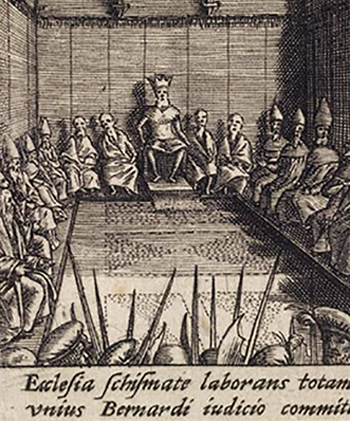
King Louis VI of France convokes a Council & asks Bernard to resolve the question of the two popes
Thus Pope Innocent came to France and was received by King Louis at Orleans. From there Innocent, accompanied by St. Bernard, went to Chartres to meet the King Henry of England with his suite. Although he had been at first persuade by an English Bishop to not receive Innocent as the rightful Pope, Bernard came to him and said:
“’Why do you hesitate? Do you think you will commit a sin by submitting yourself to Innocent? Better that you think how you will answer God for your other sins. Let me answer to God for this, if it be any sin.’ By such words the mind of the mighty King was changed and he was persuaded to receive Innocent as the rightful Pope.”
St. Bernard in Aquitaine
But there was still not accord in France because Duke William of Aquitaine was intervening forcefully for the anti-Pope. Under Anacletus he had then expelled the true Bishops of Aquitaine and replaced them with others favorable to him.
To put a speedy end to the trouble Bernard was called again from Clairvaux to visit Duke William and win him for Innocent. A meeting was arranged, where Bernard showed him that Aquitaine alone had persisted in remaining outside the unity of the Church and Ark of Salvation. The Vita tells us:
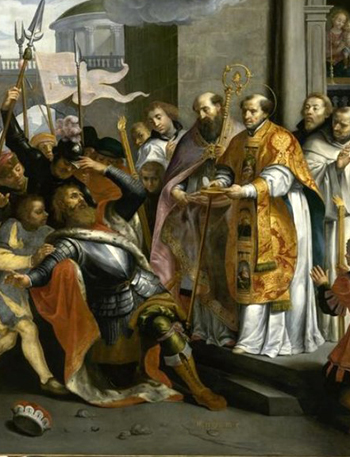
The Duke of Aquitaine falls to the ground senseless before St. Bernard & the Sacred Host
“Leaving the contending parties to it, Bernard, trusting in stronger weapons, left to say Mass. He went to the altar to offer the Holy Sacrifice. The Duke remained at the entrance.
"The Consecration was over when the Saint, who no longer looked like a mortal human being, put the Body of Our Lord on the paten and walked to the entrance of the church. His face shone and his eyes flashed lightning. No longer imploring but threatening, he stood there and addressed the Duke in a great voice:
"‘We have asked you and you have ignored us. In another assembly the servants of God have implored you but you rejected them. Now the Son of the Virgin, Who is the Head and Lord of the Church which you persecute, comes to you. Your Judge stands before you in Whose name all knees bend in Heaven, on earth and under the earth. Your Judge stands before you in Whose hands your soul too will fall. Will you despise Him and reject Him like you refused His servants?’
“When the Duke saw the Abbot coming he became paralyzed with fright. Trembling he fell down and groveled on the ground as if he were out of his senses.
“The man of God touched him with his foot, ordered him to rise and make peace with the Bishop of Poitiers whom he had expelled and lead him back to his Episcopal See.” (4)
The Duke, overwhelmed, submitted himself to Pope Innocent. Thereafter all France took the side of the legitimate Pope.
In Germany
Pope Innocent had sent envoys to Germany who were received well by Emperor Lothar III. But when the Pope went to meet him in Liege in 1131, the joyful mood soon was spoiled. The Emperor believed he could demand the investiture of the Bishops – a privilege his predecessor Emperor Henry had renounced after untiring efforts of the Roman Church.
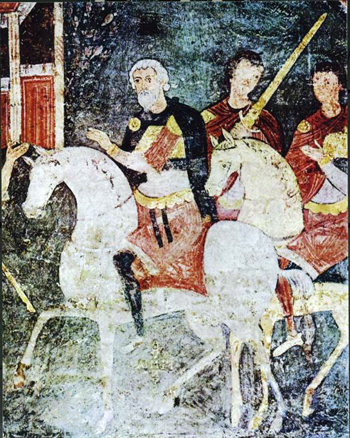
Emperor Lothar put his army at the service of the true Pope to conquer the last stronghold of Anacletus
Bernard in Italy
Now Bernard remained constantly at the side of the Pope. While much had been gained, the stronghold of the anti-Pope in Italy was not yet overcome. Accompanied by Lothar and his army, Innocent and Bernard entered Rome, but Anacletus refused to meet with him. Thus in 1135 Innocent convened a Council in Pisa of all the Bishops of the West and other prominent men.
“The holy Abbot participated in all the discussions of the Council. He was revered by all and throngs of people were constantly coming to see him, so great was the reputation of his holiness. It would take too long to go through all the Acts of the Council, but the principal result of it was the excommunication of Pierleoni and the expulsion from the Church of all who favored him.” (6)
End of the Schism
Now King Roger of Sicily was the only remaining ruler who refused to give his obedience to Innocent because of his personal interests in maintaining Anacletus as pope. Therefore, Bernard was invited to Italy in the Spring of 1136 to debate against a brilliant lawyer Peter of Pisa. King Roger was certain that his champion could vanquish the Abbot of Clairvaux in the arena of a public debate.
So both parties came at his invitation to Salerno. But Peter of Pisa, after delivering a superb argument, found himself completely vanquished by the words of Bernard, which were spoken sternly and directly to him. By the grace of God Bernard thus persuaded him to come back and make his peace with Innocent.
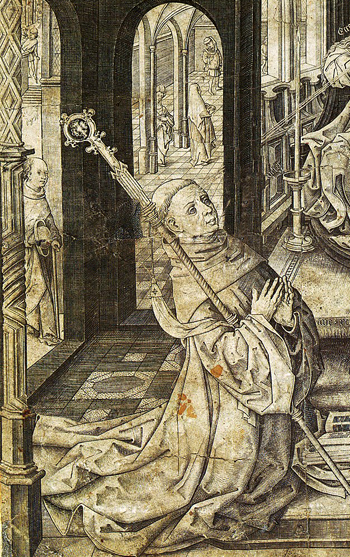
St. Bernard reconciles the antipope with Innocent II
“The time had come when the malice of Anacletus was to reach its end. The destroying angel came to the house of Pierleoni and found his doorpost unmarked with the sign of salvation. And he struck him down, sparing his life for only three days so that he would have time to repent of all his evil deeds.
"But the anti-Pope abused God’s patience and died impenitent and despairing. He was buried with meaningless pomp and buried in an unknown place.
“His followers elected another anti-pope to succeed him, who took the name Victor. They did not intend to prolong the schism but rather waited for a more favorable occasion for reconciliation with Innocent, which God soon brought about through His servant Bernard.
“During the night, the false Pope came to Bernard. The Saint took from him the usurped insignia and led him to the feet of Innocent. Great jubilation prevailed in the whole city and the Roman people submitted themselves to Innocent as their lord and shepherd.
“The Abbot of Clairvaux was highly praised and celebrated by all of Rome as peace maker and father and revered as pater patriae. And although they would have loved to keep him with them, they could not hold him longer than a fortnight. He had labored for the unity of the Church for over seven years.” (7)
Continued
- Maurice Pinay, The Plot Against the Church, Part 4: The Jewish Fifth Column in the Clergy, https://www.heritage-history.com/index.php?c=read&author=pinay&book=plot2&story=bernard
- Ibid.
- Hugo H However, Saint Bernard The Oracle of the 12th Century, NY: Catholic Book Pub. Co., 1952, pp. 39-40.
- Ibid., pp. 42-43.
- Ibid., p. 44.
- Ibid., p 46
- Ibid., p 47-48.
Everywhere he went, St. Bernard worked miracles
& drew crowds of people


Posted February 13, 2026
______________________
______________________
 Volume I |
 Volume II |
 Volume III |
 Volume IV |
 Volume V |
 Volume VI |
 Volume VII |
 Volume VIII |
 Volume IX |
 Volume X |
 Volume XI |
 Special Edition |