Stories & Legends
 |
 |
 |
 |
 |
 |
 |
The Lion of Don Juan of Austria
The figure of Don Juan of Austria (1547–1578) – the natural son of Emperor Charles V of Spain and the victor at Lepanto – has many symbols that transcend mere biography. Prominent among these is the presence of a lion as a companion, which represents a singular episode that tradition has handed down as a sign of his heroic and providential character. The lion, the quintessential regal beast, becomes a living metaphor for his mission as the defender of Christendom.
A Tunisian gift
Following the expedition to Tunis in 1573, Don Juan was a guest in the private quarters of Alcazaba, the castle of King Hamida. A winding staircase from those upper quarters desceded to a shady garden, with hedges of myrtle, beautiful flower bed, oranges and lemons, quinces and pomegranages.
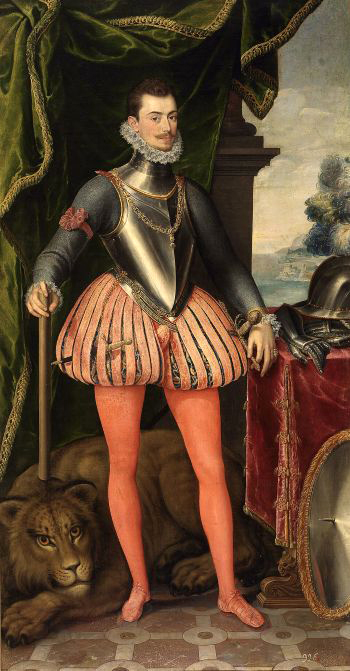 Shortly after his arrival, Don Juan entered this garden in the hour of siesta. He was accompanied by the Captain General of the artillery Gabrio Cerveloni and Juan de Soto. Seated on a bench of Moorish tiles, they rested amiably together with no need of conversation.
Suddenly along one of the myrtle-lined pathways, they saw an enormous lion with a magnificent mane advancing calmly. Don Juan’s hand went to his dagger. But it slowly came down as he noted the gentle disposition of the animal who approached the standing Don Juan, rubbed against him like a dog and fell humbly at his feet. A Nubian slave explained the animal was a tamed lion that belonged to King Hamida.
Don Juan caressed the beast's mane, and it seemed as if a bond formed between the lion of Austria and lion of the desert, the latter becoming the devoted slave of the former. Seeing this, King Hamida gave the lion to Don Juan as a sign of friendship.
This is the description of Don Juan and his lion made by the great knight Luis Zapata de Calatayud in his Miscellany:
“Don Juan gave it his own name of Austria, and neither by day nor by night, like a faithful captain, did it ever leave its post. When transacting business at Naples he had it lying at his feet like a greyhound, its head on the ground, and satisfied with the attention paid to it.
“When he dined it was at the table, and ate what D. John gave it. It came when he called it, and on the galley, the boat was its dwelling place. When he was riding, it ran at his stirrups like a lackey, and if he went on foot, behind like a page.
“There was nothing in his royal house at which this gentle and obedient lion was not present, to the point of being by day or by night among those of his bedchamber. And if it was crossed with anyone who took hold of it in order to rouse it, a word from the Lord Don Juan, calling, “Austria, quiet, come here,” pacified it, and it went to throw itself on his bed.
“This beautiful and rare animal, when Don John left Naples for Flanders, gave such sighs and roars that it saddened and astonished all those of that kingdom. At last, from sorrow for the loss and absence of its master, eating much and eating little, it died.”
For the man of his times, Don Juan’s lion was a providential sign. Just as Samson tore apart the lion (Judges 14:5–6), Don Juan vanquished the Ottoman power at Lepanto. The wild animal – tamed and obedient – reflects the victory of the Catholic order over the beast of Islam. And, like the Lion of Judah, Don Juan of Austria fought on behalf of the Church.


A Tunisian gift
Following the expedition to Tunis in 1573, Don Juan was a guest in the private quarters of Alcazaba, the castle of King Hamida. A winding staircase from those upper quarters desceded to a shady garden, with hedges of myrtle, beautiful flower bed, oranges and lemons, quinces and pomegranages.
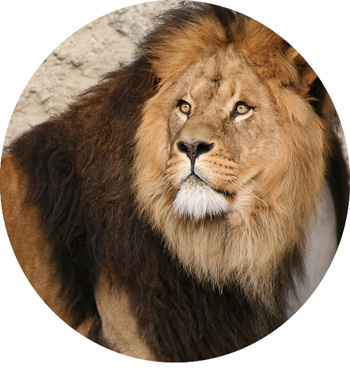
Don Juan of Austria depicted with his lion at his feet
Suddenly along one of the myrtle-lined pathways, they saw an enormous lion with a magnificent mane advancing calmly. Don Juan’s hand went to his dagger. But it slowly came down as he noted the gentle disposition of the animal who approached the standing Don Juan, rubbed against him like a dog and fell humbly at his feet. A Nubian slave explained the animal was a tamed lion that belonged to King Hamida.
Don Juan caressed the beast's mane, and it seemed as if a bond formed between the lion of Austria and lion of the desert, the latter becoming the devoted slave of the former. Seeing this, King Hamida gave the lion to Don Juan as a sign of friendship.
This is the description of Don Juan and his lion made by the great knight Luis Zapata de Calatayud in his Miscellany:
“Don Juan gave it his own name of Austria, and neither by day nor by night, like a faithful captain, did it ever leave its post. When transacting business at Naples he had it lying at his feet like a greyhound, its head on the ground, and satisfied with the attention paid to it.
“When he dined it was at the table, and ate what D. John gave it. It came when he called it, and on the galley, the boat was its dwelling place. When he was riding, it ran at his stirrups like a lackey, and if he went on foot, behind like a page.
“There was nothing in his royal house at which this gentle and obedient lion was not present, to the point of being by day or by night among those of his bedchamber. And if it was crossed with anyone who took hold of it in order to rouse it, a word from the Lord Don Juan, calling, “Austria, quiet, come here,” pacified it, and it went to throw itself on his bed.
“This beautiful and rare animal, when Don John left Naples for Flanders, gave such sighs and roars that it saddened and astonished all those of that kingdom. At last, from sorrow for the loss and absence of its master, eating much and eating little, it died.”
For the man of his times, Don Juan’s lion was a providential sign. Just as Samson tore apart the lion (Judges 14:5–6), Don Juan vanquished the Ottoman power at Lepanto. The wild animal – tamed and obedient – reflects the victory of the Catholic order over the beast of Islam. And, like the Lion of Judah, Don Juan of Austria fought on behalf of the Church.
Adapted from Fr. Luis Colona, The Story of Don John of Austria,
(NY: John Lane Co., 1912), pp. 316-317
Posted June 6, 2026
(NY: John Lane Co., 1912), pp. 316-317
Posted June 6, 2026


______________________
______________________
 |
 |
 |