Saints of the Day
 |
 |
 |
 |
 |
 |
 |
Bl. Joachim Firayama Diz - August 19
Biographical Selection:
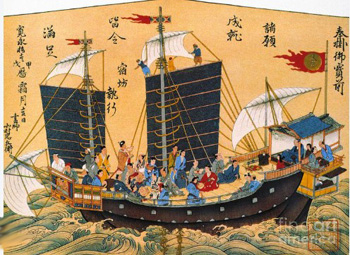
Joaquim Firayama Diz was a Japanese noble Catholic who was a captain of a ship. In 1620, in the Manila port in the Philippines, he received several special passengers: the Augustinian Fr. Pedro de Zuñiga, the Dominican Fr. Luis Flores, and two Spanish laymen who were going to Japan to do missionary work despite the violent persecution against Catholics that had been launched there.
As his ship passed by Formosa Island, the English ship Elizabeth captured the Japanese ship and took all as prisoners. When they realized that there were Catholics on board, the English were happy since, by a decree of the Japanese Emperor, the Catholics were worth a good price. The kidnappers joined hands with Dutch pirates and decided to hand them over to the Japanese at Firando and divide the ransom.
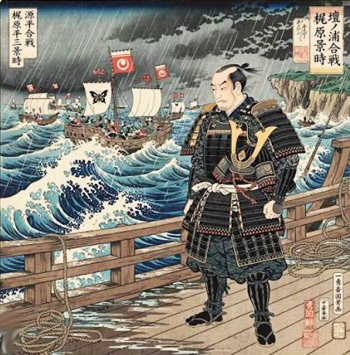 Then, a long Via Crucis started for the prisoners that only ended two years later. The Dutch Protestants did all they could to see them tried as Catholics before the Japanese authorities, while their religious superiors tried to free them. Prisons, tortures, escapes and re-captures were common occurrences during those two years. Finally, when the priests were condemned to burn to death and Firayama and his crew to be beheaded, the Dutch celebrated the event with a salvo of artillery.
On August 19, 1622, their execution took place at Nagasaki. Two facts are noteworthy:
1. Special privileges were granted to one of the priests, Bl. Pedro de Zuñiga, who was from a high ranking Spanish noble family, before the martyrdom.
2. The response Firayama gave to the judges when they asked him to pay for the legal costs of the process: He answered that, since all his goods had been confiscated by the heretics, he delegated them to pay that debt.
On the day of the martyrdom, Captain Firayama was dressed in the Dominican habit since he was a member of the Brotherhood of the Holy Rosary. Arriving at the site of torment, a multitude of Catholics awaited them, singing the Magnificat, the Laudare Pueri and the Laudate Domine omens gentes. These hymns, sung by the children, continued all through the torments. The condemned knelt and prayed the Credo. The priests blessed the people and were tied to the columns.
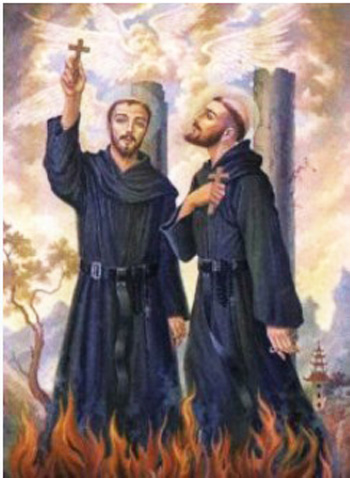 Before he was beheaded, the executioners allowed Captain Firayama to say some words to the Japanese people gathered there. He praised the principal virtues of the Catholic Faith and the glory of sacrifice. The bonfires were lit that would burn the priests alive.
One of the priests, Fr. Pedro de Zuñiga, shouted out in his great pain: “St. Augustine, my glorious father, assist me in this trial!” Fr. Flores turned to him and said, “Do not doubt this, my brother, your Patriarch Saint is at your side.”
Then, turning to Firayama, he said: “Today, Captain, you will be not a captain of a new ship, but a Captain of Heaven.”
The torment lasted 45 minutes. During that time the Catholics did not stop singing and praying for the Martyrs. Hours after their deaths, their relics were gathered. After many years the relics of the Priests were given to the Society of Jesus and the Dominican Order. Those of Bl. Firayama remained in Nagasaki, entrusted to a Japanese noble.
Comments of Prof. Plinio:
This is a most beautiful selection from every point of view, and it must touch in a special way the Nisseis [grandsons of Japanese immigrants] who are present here today. We may consider the various phases of the life of this noble Japanese Captain Joaquim Firayama.
A political plot was the backdrop of these events. St. Francis Xavier had been in Japan and won a great number of conversions. At a certain moment those conversions alarmed the Emperor of Japan, since after the death of St. Francis Xavier, they were occurring in droves and the Catholic Church in Japan was blooming.
When the Emperor learned that one of his mistresses had converted, he ordered her to deliver herself to him as she did before, but she refused. He was surprised by the answer and opened his ears to a Dutch Protestant.
The Protestant told the Emperor more or less this: “This woman does not deliver herself to you because of these priests who came speaking about religion, but in reality they came to impose the laws of Spain. For instance, in Spain it is forbidden to have more than one woman. It is a law of Spain that they are applying here without your knowledge. Japan is gradually being dominated by Spain.”
 Then, the Emperor started a tremendous religious persecution. The entrance of Catholic priests in Japan was practically forbidden. But among the people, there was already a large number of Catholics from the time when the apostolate was permitted.
The Emperor offered bounties to those who would imprison Catholics heading to Japan and deliver them to its pagan authorities. These Catholics – two priests, one Dominican and the other Augustinian, and two laymen – were heading to Japan to enter clandestinely when the ship of Captain Firayama was boarded by English and Dutch pirates.
The Protestants, seeing that Catholics were on board, decided to sell them to the Japanese government. The Catholics were sold, but until their execution there were many things that happened which the selection only refers to without a full description. It is mentioned that there were a number of attempts to help those Martyrs flee the country. They would escape but be captured again and tortured. Naturally, political pressure was exerted on the Emperor and the judges, but to no avail. After two years they were condemned to die.
Then, that most beautiful scene comes. The Martyrs were led to the place where they would be beheaded and burned at the stake, and the executioners allowed Captain Firayama to say some words to the people. He took advantage of those last moments of his life to preach the Catholic Religion. For the last time, before the multitude gathered there he professed the truths of the Faith and then walked calmly to his martyrdom.
It is beautiful to see the sense of nobility that prevailed at that time. For the priest who belonged to the Spanish nobility, they allowed some privileges because nobility was considered a special status even in such circumstances.
 The Augustinian Fr. Pedro de Zuñiga who cried out in pain for the help of Heaven was animated by the Dominican Fr. Luis Flores, who reminded him that soon he would be in Heaven. The last words of Fr. Flores were directed to Captain Firayama: “You will no longer be a Captain on Earth, but a Captain of Heaven.”
What does this mean? Was it nothing more than an amiability to make that tragedy a little lighter, or was it something more? I have the impression that in Heaven some souls lead others on earth.
St. Therese of Lisieux, for instance, leads many things on earth being in Heaven. When she said that she would let a shower of roses fall on the earth, she was indicating that she would exercise the role of a captain over souls until the end of the world.
Something similar happens with the Patron Saints who lead nations.
Over whom would Captain Firayama exercise his leadership from Heaven? Over the Japanese Catholics of his time whom he was defending, certainly. But also over all the Japanese and their descendants until the end of the world, so that they would be faithful to the Catholic Religion. If I would have Japanese blood in my veins, I would have a special devotion to this man and imitate him in his virtues: his ardent faith, a military spirit at the service of the Catholic Faith, his courage and coherence to the final end.
Here you see an admirable manifestation of the grace of martyrdom in that 17th century Japan similar to the grace of martyrdom that characterized the first centuries of the Church History.
Let us pray to Captain Firayama asking him to give us that spirit that characterized him.
Joaquim Firayama Diz was a Japanese noble Catholic who was a captain of a ship. In 1620, in the Manila port in the Philippines, he received several special passengers: the Augustinian Fr. Pedro de Zuñiga, the Dominican Fr. Luis Flores, and two Spanish laymen who were going to Japan to do missionary work despite the violent persecution against Catholics that had been launched there.
As his ship passed by Formosa Island, the English ship Elizabeth captured the Japanese ship and took all as prisoners. When they realized that there were Catholics on board, the English were happy since, by a decree of the Japanese Emperor, the Catholics were worth a good price. The kidnappers joined hands with Dutch pirates and decided to hand them over to the Japanese at Firando and divide the ransom.
A Japanese noble captain
On August 19, 1622, their execution took place at Nagasaki. Two facts are noteworthy:
1. Special privileges were granted to one of the priests, Bl. Pedro de Zuñiga, who was from a high ranking Spanish noble family, before the martyrdom.
2. The response Firayama gave to the judges when they asked him to pay for the legal costs of the process: He answered that, since all his goods had been confiscated by the heretics, he delegated them to pay that debt.
On the day of the martyrdom, Captain Firayama was dressed in the Dominican habit since he was a member of the Brotherhood of the Holy Rosary. Arriving at the site of torment, a multitude of Catholics awaited them, singing the Magnificat, the Laudare Pueri and the Laudate Domine omens gentes. These hymns, sung by the children, continued all through the torments. The condemned knelt and prayed the Credo. The priests blessed the people and were tied to the columns.
Martyrdom of Dominican Fr. Luis Flores & Augustinian Fr. Pedro de Zuñiga
One of the priests, Fr. Pedro de Zuñiga, shouted out in his great pain: “St. Augustine, my glorious father, assist me in this trial!” Fr. Flores turned to him and said, “Do not doubt this, my brother, your Patriarch Saint is at your side.”
Then, turning to Firayama, he said: “Today, Captain, you will be not a captain of a new ship, but a Captain of Heaven.”
The torment lasted 45 minutes. During that time the Catholics did not stop singing and praying for the Martyrs. Hours after their deaths, their relics were gathered. After many years the relics of the Priests were given to the Society of Jesus and the Dominican Order. Those of Bl. Firayama remained in Nagasaki, entrusted to a Japanese noble.
Comments of Prof. Plinio:
This is a most beautiful selection from every point of view, and it must touch in a special way the Nisseis [grandsons of Japanese immigrants] who are present here today. We may consider the various phases of the life of this noble Japanese Captain Joaquim Firayama.
A political plot was the backdrop of these events. St. Francis Xavier had been in Japan and won a great number of conversions. At a certain moment those conversions alarmed the Emperor of Japan, since after the death of St. Francis Xavier, they were occurring in droves and the Catholic Church in Japan was blooming.
When the Emperor learned that one of his mistresses had converted, he ordered her to deliver herself to him as she did before, but she refused. He was surprised by the answer and opened his ears to a Dutch Protestant.
The Protestant told the Emperor more or less this: “This woman does not deliver herself to you because of these priests who came speaking about religion, but in reality they came to impose the laws of Spain. For instance, in Spain it is forbidden to have more than one woman. It is a law of Spain that they are applying here without your knowledge. Japan is gradually being dominated by Spain.”
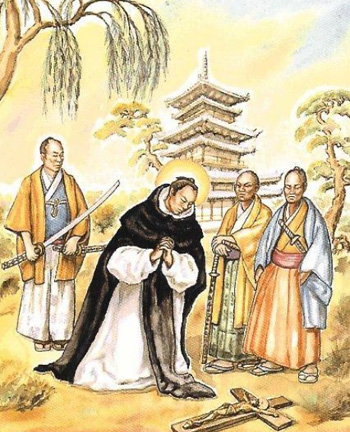
Martyrdom of a Dominican in Japan
The Emperor offered bounties to those who would imprison Catholics heading to Japan and deliver them to its pagan authorities. These Catholics – two priests, one Dominican and the other Augustinian, and two laymen – were heading to Japan to enter clandestinely when the ship of Captain Firayama was boarded by English and Dutch pirates.
The Protestants, seeing that Catholics were on board, decided to sell them to the Japanese government. The Catholics were sold, but until their execution there were many things that happened which the selection only refers to without a full description. It is mentioned that there were a number of attempts to help those Martyrs flee the country. They would escape but be captured again and tortured. Naturally, political pressure was exerted on the Emperor and the judges, but to no avail. After two years they were condemned to die.
Then, that most beautiful scene comes. The Martyrs were led to the place where they would be beheaded and burned at the stake, and the executioners allowed Captain Firayama to say some words to the people. He took advantage of those last moments of his life to preach the Catholic Religion. For the last time, before the multitude gathered there he professed the truths of the Faith and then walked calmly to his martyrdom.
It is beautiful to see the sense of nobility that prevailed at that time. For the priest who belonged to the Spanish nobility, they allowed some privileges because nobility was considered a special status even in such circumstances.
Fr. Flores told Firayama:
‘You will be Captain in Heaven’
What does this mean? Was it nothing more than an amiability to make that tragedy a little lighter, or was it something more? I have the impression that in Heaven some souls lead others on earth.
St. Therese of Lisieux, for instance, leads many things on earth being in Heaven. When she said that she would let a shower of roses fall on the earth, she was indicating that she would exercise the role of a captain over souls until the end of the world.
Something similar happens with the Patron Saints who lead nations.
Over whom would Captain Firayama exercise his leadership from Heaven? Over the Japanese Catholics of his time whom he was defending, certainly. But also over all the Japanese and their descendants until the end of the world, so that they would be faithful to the Catholic Religion. If I would have Japanese blood in my veins, I would have a special devotion to this man and imitate him in his virtues: his ardent faith, a military spirit at the service of the Catholic Faith, his courage and coherence to the final end.
Here you see an admirable manifestation of the grace of martyrdom in that 17th century Japan similar to the grace of martyrdom that characterized the first centuries of the Church History.
Let us pray to Captain Firayama asking him to give us that spirit that characterized him.



  | |
|
|
The texts of both the biographical data and the comments come from personal notes taken by Atila S. Guimarães from 1964 to 1995. Given the fact that the source is a personal notebook, it is possible that at times the biographic notes transcribed here will not rigorously follow the original text read by Prof. Plinio. The commentaries have also been adapted and translated for TIA’s site.