TIA's Pilgrimages
 |
 |
 |
 |
 |
 |
 |
Our Lady of Bethlehem Pilgrimage - 2026
The Californian Liturgical Year:
Siempre Adelante!
Our second speaker is a good friend of TIA’s who has participated in our other two previous Pilgrimages.. A favorite expression of Fr. Serra was ‘Siempre adelante! Nunca atras!’ [Always forward! Never back!] So, he included those words in the title of his talk to encourage Californians to become more aware of our rich Mission past.
California’s rich Catholic history is virtually unknown by the faithful. The many stories of our Missions and Saints are sadly neglected when they could be given a life that makes the Catholic Faith present in our hearts on a daily basis.
 I have been inspired by a series of articles written by Miss Rachel Lozowski detailing the good customs of Catholic Europe for the various feast days. As these cultures developed, traditions and feasts were established to honor the Saints and glories of each region: These customs make the Faith an integral part of the spirit of the people and give each region of Europe a unique character in the plan of Divine Providence. (e.g. St. Patrick’s Day,
The Belgium Gilles, St. Joseph Tables, St. George the Dragon-Slayer, etc.
I have been inspired by a series of articles written by Miss Rachel Lozowski detailing the good customs of Catholic Europe for the various feast days. As these cultures developed, traditions and feasts were established to honor the Saints and glories of each region: These customs make the Faith an integral part of the spirit of the people and give each region of Europe a unique character in the plan of Divine Providence. (e.g. St. Patrick’s Day,
The Belgium Gilles, St. Joseph Tables, St. George the Dragon-Slayer, etc.
California has a rich Catholic history that faithful souls can honor, just as our European brethren do. All we need to do is revive that History and listen to the inspirations of grace to bring good customs to our various regions in this grand State, as large as many countries in Europe. Fostering an organic Catholic life begins with knowing the stories of our own Catholic history and practicing devotions that honor our blessed Mission past.
Ways to honor the Missions
Every Californian Catholic should make the effort to visit the Missions. To give honor to the great evangelizing efforts of Fr. Junípero Serra and his Franciscan friars, we could pray one set of mysteries of the Rosary at our nearest Mission once a month, asking Fr. Junípero Serra, Our Lady of Bethlehem, and the Patron Saint of the Mission to protect California and bring graces to its inhabitants.
 Since many Californians live within a 30-45 minute drive from a Mission, this devotion is certainly doable. It can even become a family event where, after the recitation of the Rosary, the group can walk the Mission grounds and have a picnic nearby. Let others note that they are present on the ground where California truly began!
As an added devotion, persons can choose to park one mile away from the Mission in order to walk in honor of the Friars who walked up and down El Camino Real on dirt roads under the blazing California sun in order to bring the Faith to the natives.
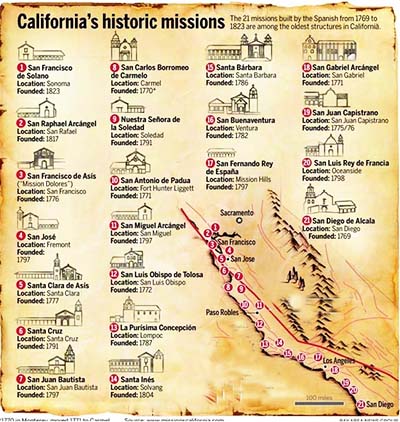
Grace will undoubtedly be showered upon us if we honor the Saints that the 21 Missions are named after by celebrating their feast days. One idea to do this is to assign the Missions to the various family members and ask each one to be responsible for researching the history of their designated Mission as the “keeper of the Mission.” Then the “keeper” would read aloud the history of Mission, telling the date of its founding, who founded it, and other stories, miracles of interesting facts that took place there.
 Special food or meals could be prepared on the feast day of the Mission Saints using the
food eaten by the missionaries during the “Time of the Bells,”
when the mission bells tolled to call the people to breakfast, lunch and dinner. Pozole, machaca, and pastel de guayaba are just a few examples of foods to make on these feast days. There are
so many others: Salsa and tortillas, persimmon and guava breads, corn, beans, eggplant, etc.
Special food or meals could be prepared on the feast day of the Mission Saints using the
food eaten by the missionaries during the “Time of the Bells,”
when the mission bells tolled to call the people to breakfast, lunch and dinner. Pozole, machaca, and pastel de guayaba are just a few examples of foods to make on these feast days. There are
so many others: Salsa and tortillas, persimmon and guava breads, corn, beans, eggplant, etc.
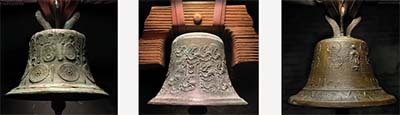
Purchasing a small, bronze bell to be brought out and used only for Mission feasts will give the day a greater significance. A tradition can be made for the “keeper of the Mission” to also be the one to ring the bell for the reading and meals of that day.
Customs like these will make these feast days more special in the hearts of individuals and families and will start to establish authentic traditions to carry on the memory of the Missions for the generations that follow.
Honoring St. Joseph
When the Mission expedition was almost abandoned in 1770 due to food shortages in the first San Diego Mission, Fr. Serra prayed a novena with the friars and soldiers to St. Joseph asking him to save the expedition. At the end of the novena and on his feast day, March 19, the supply ship was sighted in the late afternoon off the San Diego Bay by Fr. Serra himself. The expedition was saved. Fray Junípero promised to say a Mass on the 19th of every month in honor of St. Joseph in thanksgiving for his protection.
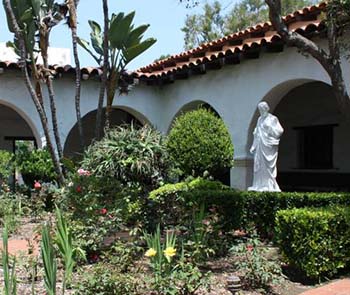 Californians could honor St. Joseph on this day by assisting at Mass with the special intention of offering thanks for saving the expedition and allowing the Catholic spirit to flourish here. If a Mass is not available, the Litany to St. Joseph could be said. For those living close to the shore, they might visit the ocean and pray one set of mysteries of the Rosary while looking out at the sea, remembering how Fr. Serra stood watch to sight the supply ship which arrived only at the last hour.
Making this trip to the beach will give us a stronger appreciation for the special role St. Joseph played in founding our home State – he was named Patron of the California Missions at the outset. It will also increase our confidence in his intercession for the miracles awaiting the faithful souls who ask for them. If one is unable to visit the beach, he can visit a lake or even nearby a fountain to bring to mind that historic scene.
Honoring the Portola Cross
On the first expedition to find Monterey Bay in 1769 and establish the second Mission on the northern coast, the bay eluded the explorers. But Fr. Juan Crespi and Gen. Gaspar Portolá planted a cross on the Carmel Bay. When they returned in 1770 and found the bay, they also found that the great cross was surrounded by gifts from the Indians. The Indians told the Friars how every night that cross would rise upward with a light that reached to the very heavens. Then, at dawn, it would return to its normal size.
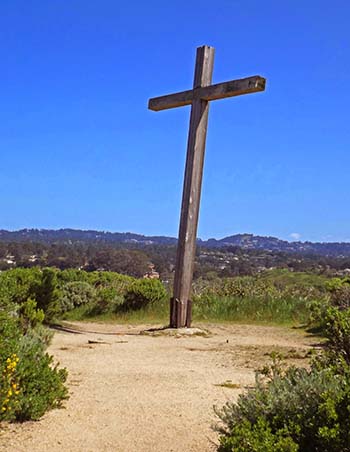 The Indians, thinking it was a God, left it food and weapons to appease this powerful new god. This miracle prepared the Indians in the area to welcome the Friars when they arrived to spread the Faith.
The exact date of the original planting of this miraculous Cross is unknown but another Cross was erected in roughly the same location on December 10, 1769. So, I propose that we Californians should honor this miraculous event on that date.
On the night of December 9, a simple cross should be made of wood and placed on a mound or in a tree branch. The family can then pray in silence to honor the wondrous miracle that moved the Indians and allowed God to speak to them in the quiet night.
The next morning on December 10, the family can decorate the cross with flower wreaths, beads and fruit in honor of the gifts given by the Indians. The story of the Shining Cross can be read, and this miracle from California’s earliest history becomes a living part of the memory of California.
Honoring Our Lady of Bethlehem
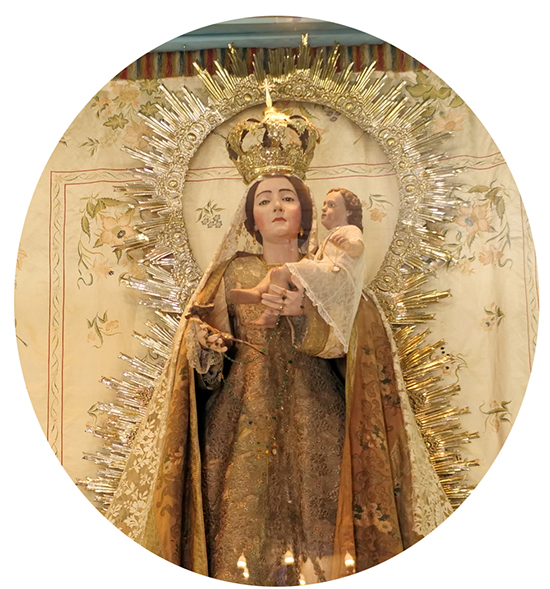
The devotion of Our Lady of Bethlehem was popular in the Age of Discovery of the New World. In the port of Lisbon, Portugal, where ships would embark on the perilous journeys, and the commanders and sailors would first pray for protection before a statue of Our Lady of Bethlehem at the historic Belém Tower. Fr. Serra brought the life-size statue of Our Lady of Bethlehem on the expedition so that she might aid the missionaries in converting the Indians of California.
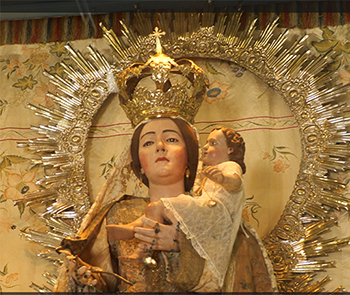 Fr. Serra brought every need he had to her feet, the Mother Mission in Carmel, and asked for her intercession in all of his labors. She was instrumentall in the founding of California and this title, Our Lady of Bethlehem, should be venerated among Californians for she was the true Patroness of California.
On her feast day, traditionally celebrated on September 8 in Carmel, we can honor her and invoke her assistance by reciting the Litany of Loreto or reciting the Rosary, processing along a beach, in a park or even the family yard with a statue of Our Lady. At the end of the Rosary, the faithful can stop and place the statue down before a tree and sing the Salve Regina in honor of the missionaries and soldiers who honored her thus after the first Mass was said by Fr. Serra under the live oak tree on the sands of Monterey Bay on Pentecost Sunday, June 3, 1770.
Most important of all is to remember that she was referred to as La Conquistadora. She was sent to conquer the hearts of the Indians and encourage the hearts of the missionaries and soldiers. We should refer to her as such on this day in particular to remind us of the militant spirit she inspired in the missionaries. Perhaps one day she will be known throughout California as Nuestra Señora la Conquistadora.
Effects of this effort
Devotions and customs like these will keep the memory of the mission times alive and implant in us a hope and faith that lives in our hearts and not just our minds. When we celebrate the events and miracles of our local history first, the Catholic Faith ceases to be routine and instead becomes a living culture that will attract thousands more.
I encourage all Californians to learn the Catholic history of our home State and celebrate these feast days in special ways. If we want to save California from its current state of diabolical destruction and draw others closer to the Faith, we ourselves must start to live our Catholic history, introducing into our lives one custom at a time.
We pray one California will return to the glorious Catholic culture that was developing under the watchful protection and care of the early Franciscan missionaries.
Posted August 12, 2026

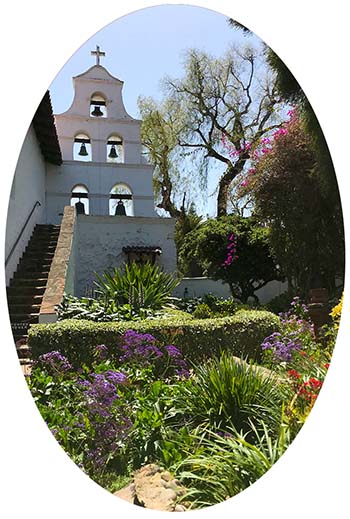
The bell tower at Mission San Diego de Alcalá, California’s first Mission founded by Fr. Serra in 1769
California has a rich Catholic history that faithful souls can honor, just as our European brethren do. All we need to do is revive that History and listen to the inspirations of grace to bring good customs to our various regions in this grand State, as large as many countries in Europe. Fostering an organic Catholic life begins with knowing the stories of our own Catholic history and practicing devotions that honor our blessed Mission past.
Ways to honor the Missions
Every Californian Catholic should make the effort to visit the Missions. To give honor to the great evangelizing efforts of Fr. Junípero Serra and his Franciscan friars, we could pray one set of mysteries of the Rosary at our nearest Mission once a month, asking Fr. Junípero Serra, Our Lady of Bethlehem, and the Patron Saint of the Mission to protect California and bring graces to its inhabitants.
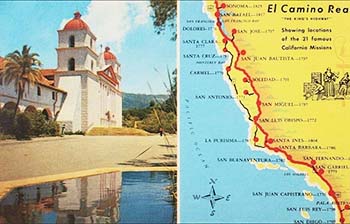
Santa Barbara, the 10th of the 21 Missions
on El Camino Real
As an added devotion, persons can choose to park one mile away from the Mission in order to walk in honor of the Friars who walked up and down El Camino Real on dirt roads under the blazing California sun in order to bring the Faith to the natives.
Grace will undoubtedly be showered upon us if we honor the Saints that the 21 Missions are named after by celebrating their feast days. One idea to do this is to assign the Missions to the various family members and ask each one to be responsible for researching the history of their designated Mission as the “keeper of the Mission.” Then the “keeper” would read aloud the history of Mission, telling the date of its founding, who founded it, and other stories, miracles of interesting facts that took place there.
Small mission bells to ring on the Mission Saint days
Purchasing a small, bronze bell to be brought out and used only for Mission feasts will give the day a greater significance. A tradition can be made for the “keeper of the Mission” to also be the one to ring the bell for the reading and meals of that day.
Customs like these will make these feast days more special in the hearts of individuals and families and will start to establish authentic traditions to carry on the memory of the Missions for the generations that follow.
Honoring St. Joseph
When the Mission expedition was almost abandoned in 1770 due to food shortages in the first San Diego Mission, Fr. Serra prayed a novena with the friars and soldiers to St. Joseph asking him to save the expedition. At the end of the novena and on his feast day, March 19, the supply ship was sighted in the late afternoon off the San Diego Bay by Fr. Serra himself. The expedition was saved. Fray Junípero promised to say a Mass on the 19th of every month in honor of St. Joseph in thanksgiving for his protection.
A statue of St. Joseph in the garden patio of the San Diego Mission
Making this trip to the beach will give us a stronger appreciation for the special role St. Joseph played in founding our home State – he was named Patron of the California Missions at the outset. It will also increase our confidence in his intercession for the miracles awaiting the faithful souls who ask for them. If one is unable to visit the beach, he can visit a lake or even nearby a fountain to bring to mind that historic scene.
Honoring the Portola Cross
On the first expedition to find Monterey Bay in 1769 and establish the second Mission on the northern coast, the bay eluded the explorers. But Fr. Juan Crespi and Gen. Gaspar Portolá planted a cross on the Carmel Bay. When they returned in 1770 and found the bay, they also found that the great cross was surrounded by gifts from the Indians. The Indians told the Friars how every night that cross would rise upward with a light that reached to the very heavens. Then, at dawn, it would return to its normal size.
The Shining Cross on a hill off Carmel beach
The exact date of the original planting of this miraculous Cross is unknown but another Cross was erected in roughly the same location on December 10, 1769. So, I propose that we Californians should honor this miraculous event on that date.
On the night of December 9, a simple cross should be made of wood and placed on a mound or in a tree branch. The family can then pray in silence to honor the wondrous miracle that moved the Indians and allowed God to speak to them in the quiet night.
The next morning on December 10, the family can decorate the cross with flower wreaths, beads and fruit in honor of the gifts given by the Indians. The story of the Shining Cross can be read, and this miracle from California’s earliest history becomes a living part of the memory of California.
Honoring Our Lady of Bethlehem
The devotion of Our Lady of Bethlehem was popular in the Age of Discovery of the New World. In the port of Lisbon, Portugal, where ships would embark on the perilous journeys, and the commanders and sailors would first pray for protection before a statue of Our Lady of Bethlehem at the historic Belém Tower. Fr. Serra brought the life-size statue of Our Lady of Bethlehem on the expedition so that she might aid the missionaries in converting the Indians of California.
Our Lady of Bethlehem at Mission San Carlos Borromeo in Carmel, Patroness of California
On her feast day, traditionally celebrated on September 8 in Carmel, we can honor her and invoke her assistance by reciting the Litany of Loreto or reciting the Rosary, processing along a beach, in a park or even the family yard with a statue of Our Lady. At the end of the Rosary, the faithful can stop and place the statue down before a tree and sing the Salve Regina in honor of the missionaries and soldiers who honored her thus after the first Mass was said by Fr. Serra under the live oak tree on the sands of Monterey Bay on Pentecost Sunday, June 3, 1770.
Most important of all is to remember that she was referred to as La Conquistadora. She was sent to conquer the hearts of the Indians and encourage the hearts of the missionaries and soldiers. We should refer to her as such on this day in particular to remind us of the militant spirit she inspired in the missionaries. Perhaps one day she will be known throughout California as Nuestra Señora la Conquistadora.
Effects of this effort
Devotions and customs like these will keep the memory of the mission times alive and implant in us a hope and faith that lives in our hearts and not just our minds. When we celebrate the events and miracles of our local history first, the Catholic Faith ceases to be routine and instead becomes a living culture that will attract thousands more.
I encourage all Californians to learn the Catholic history of our home State and celebrate these feast days in special ways. If we want to save California from its current state of diabolical destruction and draw others closer to the Faith, we ourselves must start to live our Catholic history, introducing into our lives one custom at a time.
We pray one California will return to the glorious Catholic culture that was developing under the watchful protection and care of the early Franciscan missionaries.
Posted August 12, 2026


______________________
______________________
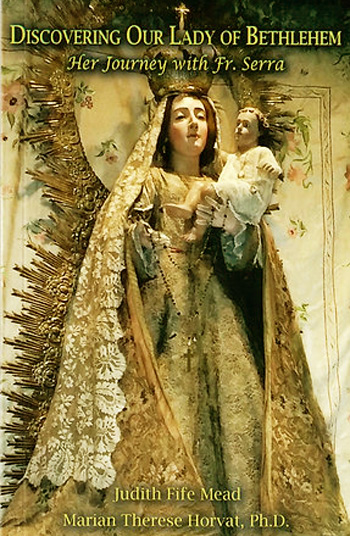
Purchase here