International Affairs
 |
 |
 |
 |
 |
 |
 |
EU Vulnerability amid Greenland Rift
- The European Union is urgently seeking to diversify its natural gas suppliers amid rising tensions with the United States over Greenland.
- A recent transatlantic trade deal has locked the EU into purchasing hundreds of billions of dollars worth of U.S. energy, creating a new strategic dependency.
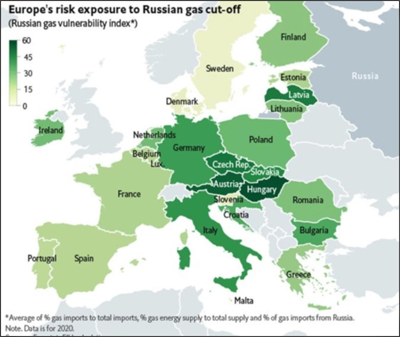
- This vulnerability echoes the bloc’s previous over-reliance on Russian gas before the 2022 Ukraine invasion, which triggered an energy crisis.
- Internal divisions persist, with member states like Hungary and Slovakia opposing a full Russian gas phase-out, citing economic harm.
- The EU is simultaneously finalizing sanctions to ban Russian LNG imports by 2027, highlighting its complex challenge of balancing energy security and political objectives.
From Russia to America
The current crisis has its roots in the seismic shift that followed Russia’s full-scale invasion of Ukraine in 2022. For decades, Europe had built its industrial economy on a foundation of relatively cheap Russian pipeline gas, which supplied 45% of the bloc’s needs. The rapid severing of those ties triggered a supply shock, quadrupling gas prices and forcing a desperate search for alternatives.
The solution was a massive influx of U.S. LNG. Imports skyrocketed from 18 million metric tons in 2021 to 65 million tons in 2025, with the U.S. now supplying nearly a quarter of all EU gas and over half of its LNG. This commercial lifeline, however, came with strategic strings attached.
Coercive deal
European dependence was formally cemented in a July 2025 trade deal, where the bloc agreed to purchase $750 billion worth of U.S. energy by 2028 to avert punitive tariffs – a pact critics labeled as economic coercion. This lopsided dependency has become a potent weapon in the escalating dispute over Greenland.
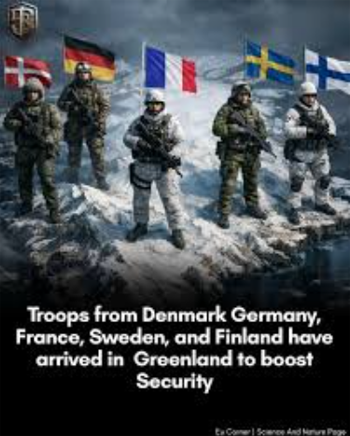
After U.S. President Donald Trump announced a bid to annex the autonomous Danish territory, citing its mineral wealth and strategic Arctic position, he threatened a 10% levy on imports from opposing European nations. The EU now faces the prospect of its primary energy supplier using that leverage to force a territorial concession from a member state, a scenario that lays bare the profound national security risk embedded in its current energy strategy.
Key consequences of the EU’s energy pivot include:
- A severe loss of strategic autonomy in foreign policy.
- Exposure to geopolitical coercion from its main supplier.
- Internal market volatility and sustained higher energy costs for consumers and industry.
- Deepening political divisions within the bloc between members seeking rapid decoupling and those fearing economic pain.
Compounding the external crisis are persistent internal fractures. As the EU finalizes new sanctions to ban all Russian gas imports by 2027, several member states – led by Hungary and Slovakia – voice strong opposition. These nations, still heavily reliant on remaining Russian supplies, argue a forced phase-out would harm European economies more than it would damage Moscow.
Data underscores the complexity: while pipeline imports have dwindled, the EU remained the largest buyer of Russian LNG as recently as September 2025, importing €5.8 billion worth in the first quarter of that year. The bloc is attempting to navigate a fraught path, simultaneously legislating an end to Russian gas while desperately trying to diversify away from its overwhelming new reliance on the United States.
A strategic liability
Energy analysts have long warned that a rapid exit from one dominant supplier without robust diversification creates market instability and strategic weakness. Europe’s experience proves the adage. The bloc replaced a dependency on Kremlin-controlled Gazprom with a dependency on a volatile political partner in Washington.
While U.S. LNG arrives via commercial contracts – a more secure model than state-controlled pipelines – the Greenland confrontation demonstrates that President Trump is willing to wield export power for political ends. The U.S. leader retains authority to restrict energy exports for national security reasons, a tool that hangs over European energy planning.
The EU’s response, including potential counter-tariffs or suspension of the trade deal, risks igniting a full-scale transatlantic trade war, further jeopardizing energy flows.
Peril of short-term fixes
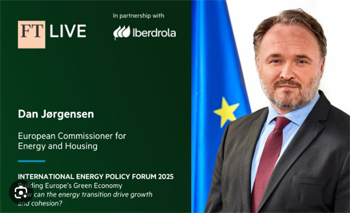
As Energy Commissioner Dan Jorgensen embarks on a mission to court suppliers in Canada, Qatar and North Africa, the bloc’s long-term security hinges on a fundamental lesson: true energy resilience cannot be found in merely swapping one external monopoly for another. It requires a difficult, expensive and unified commitment to genuine diversification, accelerated domestic production of renewables and nuclear power, and the political solidarity to withstand the economic shocks that transition entails. The continent’s future stability depends on learning this lesson before the next crisis arrives.
Read other articles by Willow Tohi here
Posted February 2, 2026



______________________
______________________
 The Return of the Muslim Threat |
 War, Just War |
 In the Wake of the Crusades |
 The Universal Republic Blessed by the Conciliar Popes |
 Vade Mecum on the Errors of Nazism |
 Curious Affinities Between the Thinking of John Paul II and Marxism |